August is National Eye Exam Month - click here for FREE healthy vision tips


If your eyes have been itching, watering, or burning since the weather warmed up, you are not imagining it. May is peak allergy season, and your eyes are often the first part of your body to feel it. In this article we’ll explain exactly what spring allergens do to your eyes, why the effects can be more serious than simple discomfort, and what steps you can take to protect your vision through allergy season and beyond.
Tree pollen dominates in early spring, but by May the combination of late-season tree pollen and the beginning of grass pollen season creates one of the highest-allergen periods of the year. According to the American Academy of Allergy, Asthma and Immunology, allergic conjunctivitis – inflammation of the membrane covering the eye and inner eyelid – affects up to 40% of the population, with symptoms peaking in spring and early summer.
For people who already have underlying eye conditions such as dry eye, cataracts, or macular degeneration, allergy season adds an additional layer of stress to eyes that are already working hard to maintain healthy function.
When airborne allergens – pollen, mold spores, grass particles – land on the surface of your eye, your immune system responds by triggering mast cells in the conjunctiva to release histamine and other inflammatory chemicals. Blood vessels dilate, tissue becomes inflamed, and the result is the familiar cluster of symptoms: intense itching, redness, excessive tearing, burning, swollen eyelids, and sensitivity to light.
But the impact goes deeper than surface discomfort. The same inflammatory response that causes itching also destabilizes your eye’s natural tear film, disrupts the ocular surface barrier, and generates oxidative stress in the delicate tissue of the eye.
This is where allergy season becomes more than a seasonal inconvenience. A comprehensive literature review concluded that inflammation is the core mechanism driving Dry Eye Disease (DED) progression. The study, drawing on tissue culture research, animal models, and human clinical data, found that “the chronicity of the disease suggests that dysregulation of immune mechanisms leads to a cycle of continued inflammation” – and that “a cure or delay in DED progression may be achieved by any means that breaks the chronic cycle of ocular surface inflammation.”
In practical terms: every allergy season that deposits unchecked inflammation on the ocular surface contributes to the cumulative burden that drives dry eye forward. The allergy response and dry eye don’t just coexist – they reinforce each other. Addressing the inflammation directly is not just about comfort. It is about protecting the long-term health of your vision.
Dry Eye Syndrome affects nearly 30% of adults and frequently worsens during allergy season. Watch for:
These symptoms should not be dismissed as minor seasonal irritation. Left unaddressed, dry eye can become chronic and contribute to more serious conditions over time.
N-Acetyl-Carnosine (NAC) is a naturally occurring dipeptide antioxidant that penetrates the cornea and works at a cellular level to counter oxidative stress and inflammation. Clinical research has shown that NAC supports natural tear production, reduces the inflammatory burden on the ocular surface, and promotes the eye’s innate ability to heal and repair itself. For dry eye specifically, NAC works precisely where the research points — interrupting the chronic inflammatory cycle that drives the condition forward.
At Wise Choice Medicine we have supported customers’ eye health with NAC eye drops for nearly 20 years. We currently offer two formulas, each with distinct strengths.
Can-C™ Original Eye Drops contain 1% NAC — the formula used in extensive peer-reviewed human clinical trials demonstrating improvements in lens clarity, visual acuity, and glare sensitivity. Trusted for dry eye support for nearly two decades, Can-C’s lubricant base directly coats and soothes the ocular surface, making it particularly comforting for the kind of irritated, inflamed eyes that allergy season produces. For customers new to NAC eye drops or managing mild to moderate dry eye and allergy-related symptoms, Can-C is the established, clinically supported first choice.*
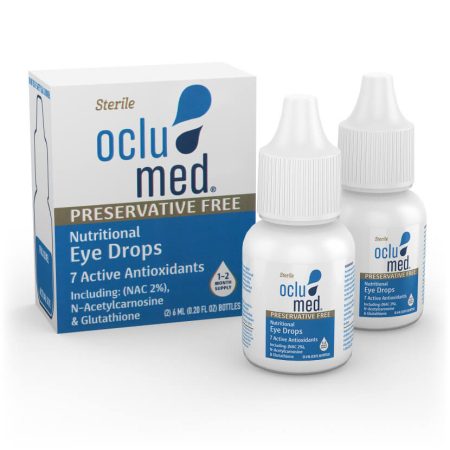
OcluMed™ NAC Eye Drops deliver 2% NAC in a preservative-free, US-made patented formula that adds a broader antioxidant complex. L-Glutathione — the eye’s primary natural antioxidant — is significantly depleted in dry eye conditions, and OcluMed replenishes it directly. L-Taurine, which is highly concentrated in healthy ocular tissue, helps protect against oxidative damage and reduces visual fatigue. A moisturizing base provides lasting comfort on the ocular surface. For customers managing more advanced dry eye, chronic inflammation, or those who want broader antioxidant coverage alongside their NAC, OcluMed’s formula provides additional targeted support.*
Both drops deliver maximum benefit when paired with Nac-C Plus™ capsules, the oral complement formulated by the inventors of Can-C. Nac-C Plus slows the breakdown of L-carnosine so each drop stays active in the eye longer, boosts the antioxidant response systemically, and provides vitamins, minerals, and amino acids that support the eye’s healing processes from the inside out. It is especially recommended for anyone dealing with advanced dry eye, cataracts, glaucoma, or macular degeneration alongside seasonal symptoms.*
Consistency makes the difference. A straightforward routine:
After several weeks of this protocol, most people notice a meaningful improvement in how their eyes feel day to day and a more resilient response to allergy triggers.
Spring allergies are unavoidable for many people, but the inflammatory damage they cause to your eyes doesn’t have to compound over time. By addressing the inflammation directly — through good daily habits and consistent antioxidant support — you can protect your eyes through peak allergy season and help prevent the kind of cumulative ocular surface damage that drives dry eye forward.
Our team is happy to help you find the right combination for your eyes. Call us at 1-800-861-4936 and our team will help you find the right solution for your eyes.
References: